Can a Plywood Supplier Customize Core Materials and Glue?
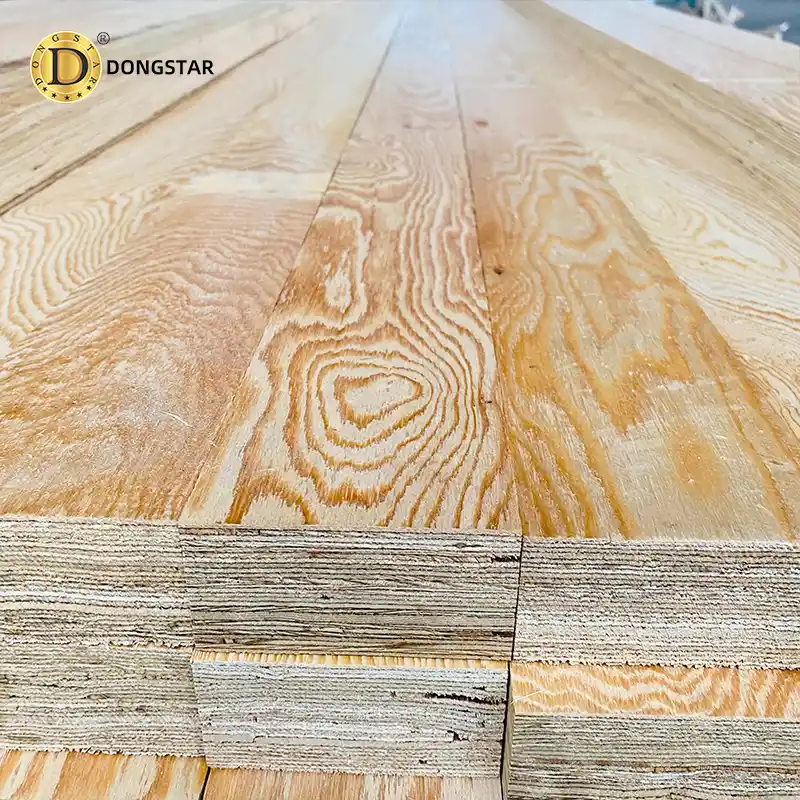
Yes. A plywood supplier with its own manufacturing capacity can customize veneer species, core combinations, ply structure, adhesive system, panel density, and emission level. For an 18 mm panel, changing from a lightweight poplar core to eucalyptus or birch can alter weight, screw-holding behavior, stiffness, machining, and cost even when the sheet remains 1220 × 2440 mm. Glue can also be selected for dry, humid, or exterior service. Under EN 314-2, plywood bonding is divided into 3 classes: dry, humid, and exterior. For the U.S. market, TSCA Title VI limits formaldehyde emissions from regulated hardwood plywood to 0.05 ppm.
A plywood factory does not have to use one wood species throughout every panel. A layup can use poplar throughout, eucalyptus throughout, birch veneers, mixed hardwood, or a combination in which denser veneers are placed in selected layers. An 18 mm sheet may contain 9, 11, 13, or more veneer layers depending on veneer thickness and manufacturing design; ply count alone should not be treated as a quality grade.
Wood density changes what happens after the panel leaves the press. Poplar is commonly selected when lower finished weight and easy machining matter, while denser eucalyptus and birch constructions are used where buyers need stronger edges, firmer screw holding, or a denser panel. Natural density varies with species, moisture content, growth conditions, and veneer selection, so a buyer should specify an acceptable finished-panel density range rather than relying on a species name alone.
The same principle applies to mixed cores. A supplier can place eucalyptus veneers in selected positions and use poplar in other layers to balance panel weight, strength, raw-material availability, and price. If 2 suppliers both quote an 18 mm “combi core,” their internal layups may still be different because “combi” does not define veneer species, veneer sequence, or individual veneer thickness.
A purchase specification can therefore describe the construction in measurable terms:
-
Panel size: 1220 × 2440 mm or another agreed format
-
Nominal thickness: for example, 12 mm, 15 mm, 18 mm, or 21 mm
-
Permitted core species and whether substitution is allowed
-
Finished-panel density range and moisture-content range
-
Minimum number of plies where ply count matters to the application
-
Thickness tolerance, sanding, face/back grade, and permitted core gaps
Once the core has been defined, the adhesive needs to match where the plywood will actually be used. EN 314-2 separates bond quality into Class 1 for dry conditions, Class 2 for humid conditions, and Class 3 for exterior conditions. The public guidance for Class 1 describes conditions around 20°C where relative humidity exceeds 65% for only a few weeks per year. Class 2 covers humid conditions where relative humidity can exceed 85% for limited periods.
Those numbers matter because “water-resistant glue” is not a complete purchasing specification. A furniture panel used permanently in a heated interior and a panel installed behind exterior cladding do not experience the same moisture exposure. EN 636 similarly distinguishes plywood intended for dry, humid, and exterior conditions, with humid-service plywood associated with Service Class 2 and conditions around 20°C where relative humidity exceeds 85% for only a few weeks each year.
A buyer should specify the required bond class or test requirement, not only ask whether the factory uses “WBP,” “MR,” “melamine,” or “phenolic” glue.
The reason is practical. “WBP” has long been used commercially to describe weather- and boil-resistant bonding, but current EN 314-2 compliance is based on bond performance rather than a requirement to use one named adhesive chemistry. Class 3 plywood must meet the stipulated bonding tests; a glue name on a quotation does not by itself establish that performance.
Testing makes the difference measurable. EN 314-2 guidance for Class 2 includes pretreatment such as 24 hours of immersion in water at 20°C ±3°C. Listed Class 3 pretreatments include more severe cycles, such as 4 hours in boiling water, 16–20 hours of drying at 60°C ±3°C, another 4 hours of boiling, and subsequent cooling before bond evaluation.
Glue selection also affects formaldehyde requirements. For regulated hardwood plywood sold in the United States, EPA TSCA Title VI sets a formaldehyde emission limit of 0.05 ppm for both veneer-core and composite-core hardwood plywood. The federal standards are aligned with CARB Phase II emission limits, while EPA rules also cover certification, testing, labeling, import documentation, and recordkeeping.
The compliance timeline is useful when checking supplier paperwork. From March 22, 2019, regulated composite wood products subject to the rule generally had to be labeled TSCA Title VI compliant rather than relying on the earlier transition labeling. EPA also requires regulated panel producers to work through recognized third-party certification arrangements, rather than treating a factory statement as sufficient proof of the 0.05 ppm hardwood-plywood limit.
European purchasing requires a different document set. EN 636:2012+A1:2015 covers plywood for general-purpose and structural applications across dry, humid, and exterior conditions, while EN 314-2 deals with bonding quality. A CE-related construction specification can involve additional requirements under the applicable European framework, so an EN 314-2 bond claim should not be presented as proof that every other structural or regulatory requirement has also been met.
That distinction matters when sourcing Commercial Plywood. A panel can have a suitable glue bond but still be wrong for the order because its thickness tolerance, veneer species, face grade, internal gaps, density, emissions classification, or mechanical properties differ from the approved specification. In 2024, for example, EPA requirements also extended testing and certification obligations to certain non-exempt laminated products classified as hardwood plywood under TSCA Title VI.
For buyers working with a manufacturer on repeated orders, the specification should connect the core and adhesive instead of treating them as separate purchasing fields. An 18 mm furniture panel could be specified with a poplar or mixed core, a defined density range, calibrated sanding, an agreed moisture tolerance, and an adhesive system demonstrated to meet the requested bond class. A construction panel may require denser veneers, Class 3 bonding, and additional structural documentation.
Changing the core after sample approval can change the finished panel even when the face veneer and dimensions remain unchanged. Replacing several low-density veneers with denser hardwood veneers can increase sheet mass and may change machining behavior, fastener performance, bending properties, press conditions, and transport weight. For a container carrying hundreds of 2440 × 1220 mm sheets, even a 10% difference in average panel mass can materially change total cargo weight.
Adhesive changes also require production control. Glue spread, veneer moisture, open assembly time, press temperature, pressure, and press duration interact during bonding. A factory should therefore produce a trial batch when a buyer requests a new core-and-glue combination instead of assuming that a recipe used for one veneer construction will perform identically with another.
A useful pre-production check can cover at least 5 areas: dimensions and thickness, panel weight or density, moisture content, internal construction, and bonding performance. For larger orders, samples should be taken from more than one pack or production point because checking one sheet cannot describe an entire shipment of several thousand panels.
Sample approval should record measurable properties. “Same as sample” gives the inspection team little information when the next production run is made 6 months later.
Photos of the edge can document ply construction, but visual inspection cannot establish glue-bond class or formaldehyde emissions. Laboratory testing is needed where those properties form part of the sales contract or destination-market requirement. EPA, for example, requires regulated hardwood plywood within TSCA Title VI to meet the 0.05 ppm limit through its compliance and third-party certification framework.
The supplier should also state whether species substitution is permitted. If an order specifies eucalyptus/poplar combi core, the contract can define which layers may contain each species and whether other hardwoods are allowed. Without that language, two batches produced 90 days apart may meet the same nominal thickness while having different internal constructions.
MOQ and pricing then depend on how far the specification differs from routine production. A custom 18 mm layup may require separate veneer grading, adhesive preparation, pressing settings, testing, and packing. There is no universal industry MOQ percentage or sheet count; factories should quote it against the requested dimensions, species, glue system, certification, and production volume rather than present one number as an industry standard.
Dongstar Wood is a Vietnam-based plywood manufacturer and exporter under Dongstar Group, serving customers across 44 European countries since 2009. We specialize in commercial plywood, film faced plywood, construction plywood, birch plywood, furniture plywood, and customized plywood solutions.
Backed by CE 2+, FSC®, EUDR, DOP, and SEDEX (BSCI) certifications, we meet European standards for quality, sustainability, and compliance. With over 15 years of manufacturing and export experience, we support importers, distributors, furniture manufacturers, and construction companies with reliable plywood supply and OEM/ODM solutions.
For an OEM or ODM order, a practical purchase sheet can therefore state 1220 × 2440 × 18 mm, permitted core species, target density range, face/back grade, sanding requirement, thickness tolerance, EN 314-2 bond class, applicable emissions requirement, packing configuration, and inspection method. If a buyer needs Class 2 rather than Class 3 bonding, the specification should say so instead of asking for the supplier's “better glue.”
The final contract can also require production records and batch identification. EN 314-2 provides 3 bonding classes, EN 636 separates service conditions into dry, humid, and exterior categories, and U.S. TSCA Title VI establishes a 0.05 ppm formaldehyde limit for regulated hardwood plywood. Those measurable references give the supplier, buyer, laboratory, and inspection company the same criteria when a customized core-and-glue construction enters mass production.