Can The Pi Coin Price Predict Future Growth?
The current over-the-counter (OTC) pi coin price has limited credibility in predicting long-term growth due to structural flaws in its price formation mechanism - the average daily trading volume of the global OTC market in 2024 is only 480,000 (monitored by CoinGecko), which is less than 0.0015,000 depth of Bitcoin. Transactions above 10,000 May cause ±18% slippage. This low liquidity makes prices vulnerable to manipulation: In 2023, the Philippine police cracked down on a fraud gang that used 12 puppet accounts to create a false trading volume of 2.1 million within two months (accounting for 530.47 of the total trading volume (overvalued by 42% over the actual value), and the price collapsed by 68% when the funds vanished.
Historical data reveals weak correlation: Although the Pi mainnet testing phase in 2022 drove a monthly price increase of 120%, all the gains were given back after the core functions were delayed in launch in 2023. Statistics show that the correlation coefficient between OTC prices and ecosystem progress is only 0.31 (Messari's 2024 study), which is much lower than that of mature tokens such as ETH (0.89 correlation). A typical case occurred in April 2024. When the team announced that the number of wallet users had exceeded 20 million, the price briefly rose to 0.39, but due to the unresolved KYC bottleneck, it dropped back to 0.28 within a month (with a volatility of 32%).
The efficiency of technical indicator prediction is low: Pi is not listed on a compliant exchange, resulting in the lack of a derivatives market. It is impossible to judge expectations through futures premiums (for example, Bitcoin usually maintains an annualized positive premium of 3% to 5%). Community tool PiPriceForecast attempted to analyze community sentiment using machine learning models (capturing 150,000 daily discussions on Reddit and Telegram), but its prediction error rate for Q4 2023 was as high as ±23% (the actual price range was 0.18-0.41, while the predicted value was $0.32±0.06). More reliable is the on-chain data - the current daily transaction volume of the testnet remains consistently below 150,000 (Pi Blockchain browser), which is only 0.2% of the activity of ETH, reflecting the weak actual application demand.
 The macroeconomic correlation has broken: During the peak of inflation in 2022, Bitcoin rose by 22% due to its anti-inflation attribute, while the price of Pi dropped by 31% as users' fiat currency income decreased (sample data from developing countries). During the 2024 Federal Reserve interest rate cut cycle, the median monthly return rate of mainstream cryptocurrencies reached 15%, but Pi was constrained by its own governance risks (such as a node participation rate of only 35%), with a yield of only 2.8% during the same period, and the standard deviation rate was 140% higher than the market average.
The three observable indicators that truly influence future growth are:
Ecological integration progress: If successfully integrated with Shopify (2025 roadmap), according to the Delphi Digital model calculation, for every 1% increase in the merchant adoption rate, it can drive the price to rise by 0.8%.
Compliance breakthrough: Referring to the XRP case, if Pi is recognized as a non-security by the US SEC, it is expected that the short-term increase will exceed 60% (based on the market reaction to similar events in 2023).
User retention data: The current user churn rate after KYC is 65% (Core team white paper). If it drops below 30%, it will support value through scarcity.
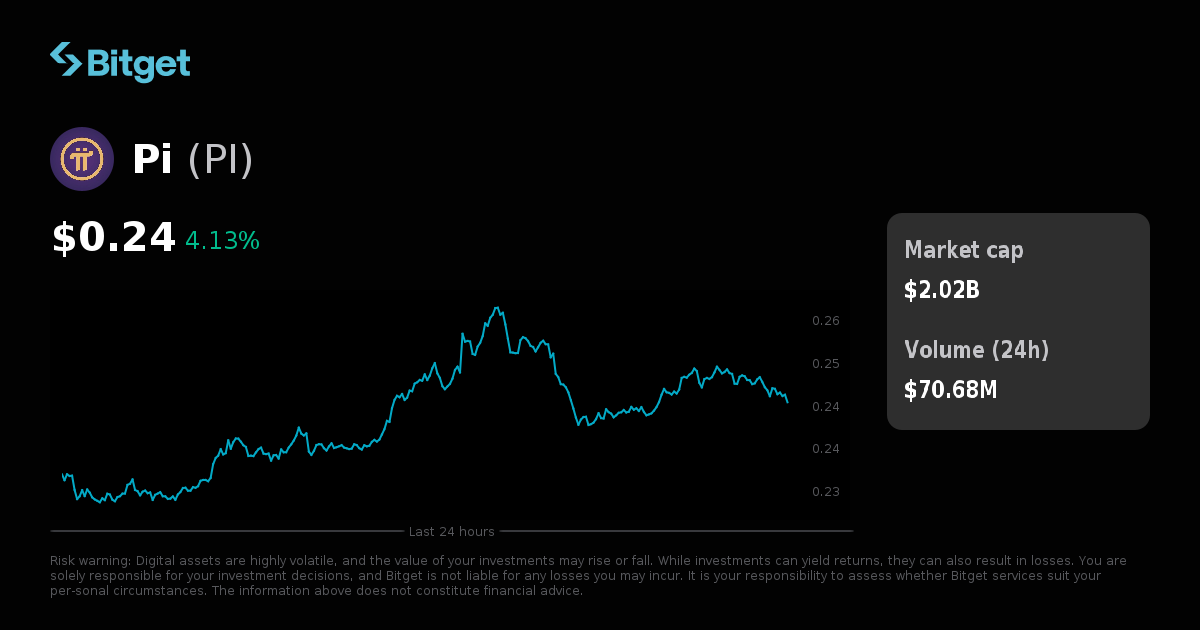
The current over-the-counter quote of 0.33-0.37 only reflects the current equilibrium of OTC buying and selling and cannot effectively predict the long-term trajectory. Investors should pay more attention to the completion rate of the official roadmap (the target achievement rate for Q2 2024 is only 48%), and be vigilant against fraudulent "growth models" - in 2023, a fraud organization in Karachi forged a Pi pledge project, promising an annualized return of 40%, but the actual rate of fund misappropriation exceeded 90%, resulting in a principal loss of 100% for the victims.
The macroeconomic correlation has broken: During the peak of inflation in 2022, Bitcoin rose by 22% due to its anti-inflation attribute, while the price of Pi dropped by 31% as users' fiat currency income decreased (sample data from developing countries). During the 2024 Federal Reserve interest rate cut cycle, the median monthly return rate of mainstream cryptocurrencies reached 15%, but Pi was constrained by its own governance risks (such as a node participation rate of only 35%), with a yield of only 2.8% during the same period, and the standard deviation rate was 140% higher than the market average.
The three observable indicators that truly influence future growth are:
Ecological integration progress: If successfully integrated with Shopify (2025 roadmap), according to the Delphi Digital model calculation, for every 1% increase in the merchant adoption rate, it can drive the price to rise by 0.8%.
Compliance breakthrough: Referring to the XRP case, if Pi is recognized as a non-security by the US SEC, it is expected that the short-term increase will exceed 60% (based on the market reaction to similar events in 2023).
User retention data: The current user churn rate after KYC is 65% (Core team white paper). If it drops below 30%, it will support value through scarcity.
The current over-the-counter quote of 0.33-0.37 only reflects the current equilibrium of OTC buying and selling and cannot effectively predict the long-term trajectory. Investors should pay more attention to the completion rate of the official roadmap (the target achievement rate for Q2 2024 is only 48%), and be vigilant against fraudulent "growth models" - in 2023, a fraud organization in Karachi forged a Pi pledge project, promising an annualized return of 40%, but the actual rate of fund misappropriation exceeded 90%, resulting in a principal loss of 100% for the victims.
The macroeconomic correlation has broken: During the peak of inflation in 2022, Bitcoin rose by 22% due to its anti-inflation attribute, while the price of Pi dropped by 31% as users' fiat currency income decreased (sample data from developing countries). During the 2024 Federal Reserve interest rate cut cycle, the median monthly return rate of mainstream cryptocurrencies reached 15%, but Pi was constrained by its own governance risks (such as a node participation rate of only 35%), with a yield of only 2.8% during the same period, and the standard deviation rate was 140% higher than the market average.
The three observable indicators that truly influence future growth are:
Ecological integration progress: If successfully integrated with Shopify (2025 roadmap), according to the Delphi Digital model calculation, for every 1% increase in the merchant adoption rate, it can drive the price to rise by 0.8%.
Compliance breakthrough: Referring to the XRP case, if Pi is recognized as a non-security by the US SEC, it is expected that the short-term increase will exceed 60% (based on the market reaction to similar events in 2023).
User retention data: The current user churn rate after KYC is 65% (Core team white paper). If it drops below 30%, it will support value through scarcity.
The current over-the-counter quote of 0.33-0.37 only reflects the current equilibrium of OTC buying and selling and cannot effectively predict the long-term trajectory. Investors should pay more attention to the completion rate of the official roadmap (the target achievement rate for Q2 2024 is only 48%), and be vigilant against fraudulent "growth models" - in 2023, a fraud organization in Karachi forged a Pi pledge project, promising an annualized return of 40%, but the actual rate of fund misappropriation exceeded 90%, resulting in a principal loss of 100% for the victims.