Why Is Hem Beer Equipment a Long-Term Brewing Investment?
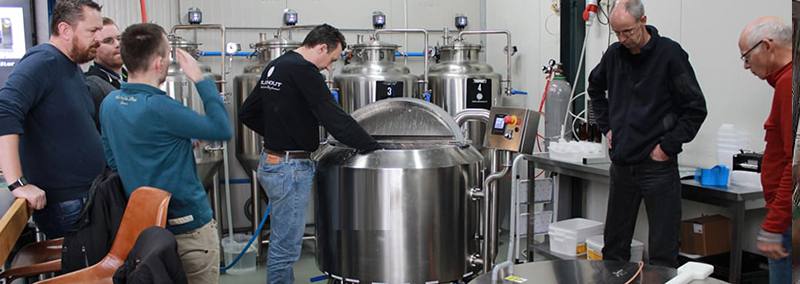
A long-term brewing investment should be judged by how many reliable batches the equipment can produce, how much labor and utility use it removes, and how easily it can be expanded or repaired. A 10 BBL brewery producing five batches per week can exceed 2,500 brews in 10 years, so small differences in heat loss, cleaning time, pump sizing, and tank downtime accumulate quickly. Hem lists 304 stainless wort piping, plate heat exchangers, glycol cooling, CIP equipment, semi-automatic controls, five inspection stages, and a 6-year warranty for specified manufacturing defects. Service life matters more than the purchase invoice alone.
Brewing equipment spends years in contact with hot wort, acidic beer, alkaline cleaning chemicals, pressurized CO₂, chilled glycol, steam, and repeated temperature changes. A commercial brewhouse may heat from roughly 65°C during mash rests to near 100°C during wort boiling, then send wort through a heat exchanger before fermentation begins. Repeating that process 200–300 times per year places far more demand on fabrication than a short equipment demonstration can show.
That workload makes stainless-steel selection and fabrication quality important over the equipment’s full operating period. Type 304 stainless steel is widely used for brewery vessels, piping, fittings, and product-contact surfaces because it handles normal brewing environments well when fabrication, passivation, cleaning chemistry, and chloride exposure are properly managed.
A tank should not be evaluated only by shell thickness. Weld finishing, internal surface condition, jacket construction, port placement, insulation, drainage, valve selection, and pressure testing all affect how the tank behaves after hundreds of cleaning and brewing cycles.
Hem states that its production inspection process includes material checks, production-process inspection, jacket pressure testing, finished-product leak testing, packing review, and serialized tank records. Its published information describes five inspection stages, giving buyers a more useful basis for equipment acceptance than appearance alone.
Pressure construction deserves equal attention because fermenters and bright tanks are not simply storage containers. The Brewers Association notes that brewing process vessels operating above 15 psi generally fall into a different pressure-safety category in the United States and may need to follow ASME requirements, depending on local rules and application. ASME’s pressure-vessel framework covers design, fabrication, inspection, and certification rather than only material selection.
That standard matters during years of carbonation, spunding, transfers, cleaning, and pressure changes. A vessel exposed to 1–2 pressure cycles per production batch can experience hundreds of cycles annually, so pressure rating, relief protection, weld quality, and documented testing deserve more attention than polished exterior surfaces.
Capacity planning then determines whether durable equipment is actually used efficiently. Hem publishes systems ranging from 1,000 L brewhouses to 10,000 L equipment packages, with 2-vessel, 3-vessel, 4-vessel, and larger configurations listed across its product range.
A 10 BBL brewhouse illustrates why configuration matters. Ten U.S. beer barrels equal about 1,173 L. At four brews per week and 90% packaged yield, annual finished volume can approach 220,000 L before downtime, seasonal changes, and cellar limitations are considered. Raise production to eight brews per week and fermentation capacity, cooling demand, labor scheduling, and packaging speed become much more restrictive.
A practical configuration therefore has to connect brewhouse output with tank residence time. An ale occupying a fermenter for 14 days and a lager occupying one for 28 days create very different cellar requirements even when both begin with the same 10 BBL brew length.
| Production item | Example operating figure | Long-term effect |
|---|---|---|
| Brew size | 10 BBL / about 1,173 L | Sets wort volume per cycle |
| Weekly brews | 5 | About 260 cycles per year |
| 10-year cycles | About 2,600 | Magnifies small efficiency differences |
| Fermentation time | 14–28 days | Changes required tank count |
| Packaged yield | 90–95% example range | Changes saleable volume from the same brew length |
Cellar sizing also explains why modular expansion can extend useful equipment life. Hem’s own 10 BBL example lists four 10 BBL fermenters and notes that breweries can begin with fewer tanks and add more later as production grows. The same example includes a 20 BBL hot-liquor tank, glycol tank, chiller, CIP unit, pumps, cooling pipework, and a semi-automatic control cabinet.
That arrangement allows the brewhouse to remain in service while fermentation capacity grows around it. If a brewery begins with four fermenters and later installs eight, annual output can rise without automatically replacing every hot-side vessel. Floor space, refrigeration capacity, electrical service, glycol headers, drainage, and packaging throughput still need to be sized for the later stage.
The hem brew system is more useful as a long-term purchase when those supporting systems are specified with the production plan rather than added one by one after installation. A glycol chiller sized only for the first four tanks may become inadequate after fermentation capacity doubles, even though the brewhouse itself still has enough output.
Cooling calculations deserve close attention because fermentation heat and crash cooling occur at different times. A brewery may need to maintain an ale near 18–20°C while another vessel is being reduced toward 2°C. Tank jackets, glycol flow, chiller capacity, ambient temperature, insulation thickness, pipe length, and simultaneous cooling demand determine whether both processes can happen without long recovery periods.
Heating creates a similar lifetime cost. A 1,000 L batch requires substantial energy to raise brewing liquor and wort through multiple temperature stages. Losing only 5% more heat than necessary during every cycle appears small on one brew day, but across 250 annual batches and 10 years the brewery pays for that loss roughly 2,500 times.
Energy performance is easier to evaluate over 5 or 10 years than over one commissioning test. Insulation, heat-exchanger sizing, steam control, condensate handling, hot-water recovery, and process scheduling all influence the number of kilowatt-hours or fuel units used per hectoliter.
Heat recovery can also improve the next batch. Wort leaving the kettle near boiling temperature must normally be cooled to yeast-pitching temperature; a properly sized plate heat exchanger transfers part of that heat into incoming water. Hem’s published 10 BBL example specifies a 10 m² plate heat exchanger, showing that heat-transfer equipment is treated as part of the brewing package rather than an unrelated accessory.
Cleaning performance adds another recurring cost. A brewery that spends 30 extra minutes cleaning after 250 brews per year adds 125 labor hours annually. Over 8 years, that reaches 1,000 hours before counting additional water, chemicals, heating, and lost production time.
CIP design affects those hours. Spray coverage, pipe velocity, return flow, drainability, pump sizing, dead legs, gasket condition, and chemical concentration determine whether soil is actually removed. Stainless product-contact surfaces also need cleaning practices that control beer stone, organic residue, yeast, and microbial growth without damaging seals or metal surfaces.
The Brewers Association has maintained technical guidance on beer-system sanitation for many years; its draught-quality work began in 2007 and continues in updated publications. The 2026 edition still treats cleaning, system design, temperature control, pressure balance, and maintenance as parts of beer quality rather than separate housekeeping tasks.
Automation changes the labor calculation in the same way. A semi-automatic brewhouse still needs a brewer, but temperature controllers, pump controls, level monitoring, timed process steps, and centralized switching reduce repeated manual adjustments. Saving 15 minutes across four repeated tasks in one brew day removes one labor hour; at 250 brew days per year, that becomes 250 hours.
Automation also improves repeatability when recipes contain several temperature rests or transfer steps. Holding a mash at 65°C instead of allowing repeated overshoot toward 68–70°C changes enzyme activity, while inconsistent knockout temperature changes the conditions yeast encounters at pitching. Sensors and controls do not replace brewing knowledge, but they make the same process easier to reproduce.
Serviceability then determines how much of the installed capacity remains available. Pumps, mechanical seals, temperature probes, solenoid valves, butterfly-valve seats, pressure gauges, heating elements, contactors, and glycol components will not all share the same service life. Equipment layouts that leave enough access for inspection and replacement reduce the time required for routine maintenance.
A failed $100 sensor can become expensive when its location forces a production line to stop for an entire day. At a 10 BBL scale, losing one brew day can remove more than 1,000 L of planned wort production. Keeping common wear parts accessible and documented is therefore more useful than trying to make every component maintenance-free.
Hem states that tanks and covered accessories or electrical components have a 6-year warranty under specified conditions, while misuse, excessive pressure, inappropriate cleaning, and operation outside design limits are excluded. Warranty language does not guarantee operating life, but it gives buyers a defined period and clearly stated operating boundaries to examine before purchase.
Purchase price should finally be compared with the volume produced during that period. Hem’s published example places a complete 10 BBL system at roughly $75,000–$200,000 depending on vessel arrangement, valve and piping design, steam equipment, fermentation capacity, and site requirements.
Spread a $150,000 equipment cost across 10 years and 2,500 batches, and the original equipment allocation is about $60 per batch before financing, installation, maintenance, utilities, and replacement parts. If the same system remains productive for 15 years rather than 8, the installed equipment is used across almost twice as many annual production cycles.
That is why tank fabrication, pressure safety, heat recovery, cooling capacity, cleaning access, controls, replacement parts, and room for additional fermenters matter together. A brewery buys the equipment once, but pays for its engineering choices on every batch that follows.